Thursday, April 14, 2011
Study Shows College Students Are Addicted To Electronics

A new study suggests that college students worldwide are "addicted" to portable electronic devices, such as cellphones, laptops and MP3 players.
Researchers asked about 1,000 students in 10 countries on five continents to give up all their portable electronic devices for 24 hours. After that break, the students wrote about their feelings and also completed a survey. Most students, whether living in developed or developing countries, are similar in how they use the devices and how "addicted" they are to them, according to the study released by the International Center for Media & the Public Agenda (ICMPA) at the University of Maryland.
The researchers had expected to find some differences among students from different countries, says project director Susan D. Moeller, a journalism and public policy professor at the University of Maryland's Philip Merrill College of Journalism and director of the ICMPA. "But it quickly became apparent, from looking at the student demographics and the students' narrative comments, that all the student-responders in this study are digital natives. It was then that we realized that digital natives have no passports: If we had covered up the place name of a student's comment we would have had no idea of the student's nationality."

Wednesday, April 13, 2011
Ethics Seminar Had Exotic Dancers
Students at La Salle University in Philadelphia say exotic dancers were part of a professor's extra-credit symposium on business ethics.
Officials at the private Roman Catholic school say they are investigating the March 21 seminar, which ended abruptly after the business school's dean showed up.
Students say the dancers kept their clothes on. Sophomore Brad Bernardino tells WPVI-TV that one dancer gave a lap dance to assistant management professor Jack Rappaport.
Rappaport did not respond to an emailed request for comment.
La Salle spokesman Joseph Donovan would not comment on Rappaport's status while the investigation continues. Students say they have a new teacher.
The seminar was held at a satellite campus about 10 miles from La Salle's main campus.
Article found: http://www.seattlepi.com/news/article/Pa-students-Ethics-seminar-had-exotic-dancers-1333952.php#ixzz1JQO2a5t0
Tuesday, April 12, 2011
Burden of College Loans on Graduates Grows

While many economists say student debt should be seen in a more favorable light, the rising loan bills nevertheless mean that many graduates will be paying them for a longer time.
“In the coming years, a lot of people will still be paying off their student loans when it’s time for their kids to go to college,” said Mark Kantrowitz, the publisher of FinAid.org and Fastweb.com, who has compiled the estimates of student debt, including federal and private loans.
Two-thirds of bachelor’s degree recipients graduated with debt in 2008, compared with less than half in 1993. Last year, graduates who took out loans left college with an average of $24,000 in debt. Default rates are rising, especially among those who attended for-profit colleges.
The mountain of debt is likely to grow more quickly with the coming round of budget-slashing. Pell grants for low-income students are expected to be cut and tuition at public universities will probably increase as states with pinched budgets cut back on the money they give to colleges.
Some education policy experts say the mounting debt has broad implications for the current generation of students.
“If you have a lot of people finishing or leaving school with a lot of debt, their choices may be very different than the generation before them,” said Lauren Asher, president of theInstitute for Student Access and Success. “Things like buying a home, starting a family, starting a business, saving for their own kids’ education may not be options for people who are paying off a lot of student debt.”
In some circles, student debt is known as the anti-dowry. As the transition from adolescence to adulthood is being delayed, with young people taking longer to marry, buy a home and have children, large student loans can slow the process further.
“There’s much more awareness about student borrowing than there was 10 years ago,” Ms. Asher said. “People either are in debt or know someone in debt.”
Monday, April 11, 2011
Your Safety School May Be The Smarter Choice
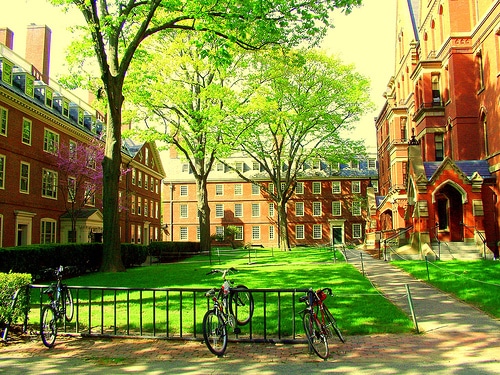
The headlines last week weren't pretty. As colleges and universities nationwide revealed their admissions decisions, news broke of a dramatic decline in acceptance rates — and not just at Ivy League schools. The shift means that for the legions of high school students who sunk all their hopes and plans into a dream school find themselves grappling with some serious disappointment this week.
Why were admissions so low? It's a numbers game. This year's graduating class is one of the largest on record. As a result, colleges saw the number of applicants soar to record-high levels, but budgetary constraints kept most of them from upping the number of spots they could offer. Harvard, the school with the lowest admission rate in the country, offered enrollment to just 6.2% of applicants, or a total of 2,158 students of the record 34,950 who applied. But it isn't just the Ivy League schools; both state schools and private liberal-arts colleges saw their acceptance rates decline as well. The University of California, San Diego, is poised to accept 34.3% of the 53,455 students who applied (down from 38.2% last year and a whopping 49% five years ago), while Amherst College in Massachusetts projects it will accept 12.6% of its 8,432 applicants.
It's not that most students won't get into college at all — there are more than enough spots nationwide for every qualified student to find a place to study — but for many, the school they end up enrolling in may not have been their first, or even third, choice. The initial sting of rejection can take a toll on a student's psyche. These are kids who are used to being the best of the best, says Julia V. Taylor, a school counselor at Apex High School in Raleigh, N.C.
But some of that letdown is self-inflicted, says Laurence Steinberg, professor of psychology at Temple University and author of You and Your Adolescent: The Essential Guide for Ages 10-25. He says our nation's obsession with rankings and prestige means that high school students — and their parents — form intense emotional commitments to schools long before admissions decisions have been made. "When they're rejected it's like being rejected by a boyfriend or girlfriend," Steinberg tells TIME. "They internalize it: What's the matter with me? What could I have done differently? Why did they choose that person and not me?"
That emotional attachment is often only about what decal students will paste on their parents' minivan, Steinberg says, but it may lead to families overlooking what may actually be the better school for the students. Taylor agrees. In her state, students most often clamor for admission to the University of North Carolina at Chapel Hill. "They don't know a thing about the university. They just know they want to wear a Tar Heels sweatshirt," she says of the university's mascot.
But the good news is, as painful as rejection is, in terms of long-term success, getting into a prestigious college doesn't matter much. A study released in March by Alan Krueger of Princeton University and Stacy Dale of Mathematica Policy Research shows students who are rejected by highly selective schools go on to bank the same average earnings as Ivy League graduates. Krueger tells TIME his study shows too much attention is paid to the schools and not enough to the students. "Students can get a good education at many places," he says. "What matters most is what students put into their education — how seriously they take their studies and how much work they put in." It's what he calls the "Spielberg effect." (Steven Spielberg, one of the most famous directors of all time, was famously rejected twice from the University of Southern California's film school. He went on to attend California State University at Long Beach, a less selective school.) "Even if students don't get in, the fact that they are confident enough to apply indicates they are ambitious and hardworking, which are qualities that will help them regardless of where they go to school," Krueger says.
Read more: http://www.time.com/time/nation/article/0,8599,2063935,00.html#ixzz1JF8e80tw
Friday, April 8, 2011
Is Your Commute Making YOU Stupid?

We know that sitting in traffic on the freeway every morning and night increases anxiety and fatigue -- plus, it's making us fat. Now, a study in mice suggests your hellish commute might also be making you dumber.
Breathing in "freeway particulate matter" -- fossile fuels, weathering car parts and pavement -- may damage neurons involved in learning and memory, according to new research from the University of Southern California. The researchers found that mice with still-developing brains were particularly vulnerable to foul freeway air.
Dr. Todd Morgan, a USC researcher, points out that we don't yet know if these findings apply to people, "but there is suggestive evidence that similar effects may be happening in humans."
How long is your commute? Let's find the reader with the longest trek to and from work -- is it you?
Article found: http://bodyodd.msnbc.msn.com/_news/2011/04/08/6434543-your-commute-is-making-you-stupid-study-suggests
Thursday, April 7, 2011
Save On College Tuition, Studying Abroad

Today's college students are often looking for ways to lower the cost of their college tuition. One way that students are increasingly discovering is spending a semester abroad. By studying abroad, many students are able to actually lower their college bills significantly. Those attending a 4year college in the U.S. pay an average of $9,700 per semester for in-state tuition. For example, a Costa Rica Study Abroad program costs less than $7,000 per semester. Add in airfare and some spending money and the savings is still at least $1,500. Remember this savings is compared to average in-school tuition so the savings for out-of-state and private colleges is many thousands more and can be as much as 75% compared to a semester in their home university.
Not only is this monetary savings significant for students, but the enhanced cultural experience adds a extra dimension to a student's education. Survey after survey of human resource department personnel show that job applicants with international educational experiences and additional language skills standout compared to applicants without these experiences and skills. This translates into more interviews and a higher percentage of job offers. Further, bilingual employees have been shown to earn more over the course of their careers.
In addition to the savings, many college students are just now learning that the myths they have heard regarding studying in other countries are actually far from true. For example, Federal financial aid, scholarships, and certain grants can be used to pursue College Study Abroad. According to industry leader AmeriSpan's co-founder John Slocum, "One of the biggest myths out there is that studying abroad costs more than a regular semester. Prices are lower than in-state tuition at many public institutions and the savings are huge compared to out-of-state or private college tuition. Moreover, financial aid can be used for studying abroad including travel costs." On top of this, study abroad scholarships are available to help students who might otherwise not have the means to pursue this course of study.
Founded in 1993, AmeriSpan Study Abroad offers more than 100 study abroad, language-learning and volunteer programs worldwide for participants of all ages and language level. The Philadelphia-based organization has long been an innovator in the study abroad field, building its reputation by offering high quality, low cost language immersion programs. In September 2010, the company was awarded its 2nd consecutive 'Star Award' as the Best Agency in North America. The industry's prestigious Star Award is voted by organizations worldwide and awarded annually.
Article found: http://www.prweb.com/releases/prweb2011/4/prweb8281678.htm
Tuesday, April 5, 2011
Working Hard May Kill You..

A new study has found that office workers in England significantly increased their chances of having a heart attack by working more hours than their peers.
The study, conducted by researchers at University College London, found that employees who regularly worked 11-hour days or longer were 67 percent more likely to develop heart disease than those who worked seven- or eight-hour days.
One U.S. expert said many factors could account for the rise in risk among those tied too long to the office.
"Those working long hours may have less time for exercise, healthy eating and physicians visits," said Dr. Gregg C. Fonarow, associate chief of cardiology at UCLA's David Geffen School of Medicine. "They may be exposed to more stress, get less sleep and engage in other behaviors which contribute to cardiovascular risk."
The study, published in the April 5 issue of the Annals of Internal Medicine, followed a low-risk population of almost 7,100 British civil servants from 1991 until 2004, screening out those with signs of heart disease.
About 70 percent of the workers were men, and most (91 percent) were white. Roughly 2.7 percent developed coronary heart disease by the end of the study, the researchers found.
Participants reported how many hours they spent on the job, including work they took home with them. More than half (54 percent) put in between seven and eight hours a day, while 21 percent worked a nine-hour day, and 15 percent spent 10 hours on the job daily, the study found. Slightly more than 10 percent labored 11 hours or more.
Besides bumping up the risk for heart disease by 67 percent compared to people working an eight-hour day, working 11-plus hours a day also put some people into a whole other risk category, the team found.
"Adding working hours to the Framingham risk score improved identification of persons who later developed heart disease," explained study co-author Mika Kivimaki. The Framingham risk score, aimed at gauging heart disease risk, is developed from data that includes age, sex, blood pressure level, cholesterol levels, and whether or not a patient smokes, said Kivimaki, a professor of social epidemiology at University College London.
Monday, April 4, 2011
Snooki Talks To Rutgers Students

What does $32,000 get you?
Rutgers University students got two hour-long question-and-answer sessions tonight with "Jersey Shore" icon Nicole "Snooki" Polizzi. In the first hour, Snooki offered anecdotes about her reality show, dance lessons, a demonstration on styling her iconic "pouf" hairdo and her lessons for life.
Her parting advice to Rutgers students: "Study hard, but party harder."
About 500 students attended the 8 p.m. sold-out show at the Livingston Student Center in Piscataway. A second show was scheduled to start at 10 p.m. Snooki was paid $32,000 for the two shows using money that came from the mandatory student activity fees paid by Rutgers undergraduates.
Among the highlights and lowlights of the first show:
• Snooki and her sidekick, comedian Adam Ace, brought eight students on stage to teach them the "Jersey Shore" fist pump and her signature "tree branch" dance. Snooki also judged a "Situation" contest to see which of five male students had the best abs.
• Snooki introduced her father, who was in the audience and lifted his sweater to reveal a sleeveless T-shirt with "Papa Snooki" printed on the back. "My Dad is what you call... a retired guido," Snooki said.
• A student asked Snooki to be his date to his fraternity formal next month. She briefly considered it. "When is it?" she said. "May 3," he said. "I'll be in Rome," she said, referring to the filming of Season 4 of "Jersey Shore" in Italy.Her parting advice to Rutgers students: "Study hard, but party harder."
About 500 students attended the 8 p.m. sold-out show at the Livingston Student Center in Piscataway. A second show was scheduled to start at 10 p.m. Snooki was paid $32,000 for the two shows using money that came from the mandatory student activity fees paid by Rutgers undergraduates.
Among the highlights and lowlights of the first show:
• Snooki and her sidekick, comedian Adam Ace, brought eight students on stage to teach them the "Jersey Shore" fist pump and her signature "tree branch" dance. Snooki also judged a "Situation" contest to see which of five male students had the best abs.
• Snooki introduced her father, who was in the audience and lifted his sweater to reveal a sleeveless T-shirt with "Papa Snooki" printed on the back. "My Dad is what you call... a retired guido," Snooki said.
• When asked to describe her perfect man, Snooki said his name has to end with a vowel, he can't be boring, he has to make her laugh and he must be close to his parents. He also needs to be tan. "I can't be with anyone pale, that would be awkward," she said.
• When asked her inspiration in life, Snooki said: "Being tan. When you're tan, you feel better about yourself."
• Snooki brought a Rutgers student on stage and offered to put her hair in a "pouf" using a banana hair clip. Snooki wasn't thrilled with the results. "That's as good as it's gonna get," she said. When asked what she uses to style her own "pouf," Snooki said he relies on Aussie-brand hair products. "Smells good and stays in good," she said.
• If Snooki had a choice she wouldn't spend summers in Seaside Heights, where "Jersey Shore" is filmed. She prefers Belmar, she said.
• Snooki said she had partied at Rutgers before, but the details were hazy. "I'm pretty sure I came here. I don't remember what happened," she said.
• When a student asked what kind of oil she uses to make fried pickles, one of her favorite foods, Snooki was horrified.
"I don't fry them, I buy them," she said with distain.
• Snooki's final words for Rutgers: "I love you bit***s!"
Friday, April 1, 2011
Fast Food Twice As Bad For You With Coffee

Blood sugar levels are not a major concern for everyone, but they should be of moderate concern to the general population considering the rising trend of diabetes. This why a new study from the University of Guelph regarding the combined affect of saturated fat and caffeine on blood sugar levels is worthy of note.
The study, published in the Journal of Nutrition, discovered that eating a fast food meal high in saturated fat with a coffee is even worse for you than without one. Researchers noted that not only does a healthy person’s blood sugar level spike after eating a high-fat meal, but that the spike doubles after having both a fatty meal and caffeinated coffee – jumping to levels similar to those of people at risk for diabetes.
“The results tell us that saturated fat interferes with the body’s ability to clear sugars from the blood, and when combined with caffeinated coffee, the impact can be even worse,” said lead resarcher and PhD candidate Marie-Soleil Beaudoin in a statement. “Having sugar remain in our blood for long periods is unhealthy because it can take a toll on our body’s organs.”
Participants in the study were healthy young men between the ages of 20-30. In the second part of the study, the men drank about one gram of a specially designed saturated fat drink for every kilogram of body weight. They then drank either two cups of caffeinated or decaffeinated coffee five hours later, followed by a sugar drink an hour later. The results showed blood sugar levels rose to 65% above what they were with the caffeinated coffee and fat drink. With just the fat drink, participants blood sugar levels only rose 32%.
“Ultimately we have found that fat and caffeinated coffee are impairing the communication between the gut and the pancreas, which could be playing a role in why participants couldn’t clear the sugar from their blood as easily,” said Beaudoin.
Referring to the impact coffee had five hours after the fat drink, she adds, “This shows that the effects of a high-fat meal can last for hours. What you eat for lunch can impact how your body responds to food later in the day”.
Article found: http://news.nationalpost.com/2011/04/01/fast-food-is-twice-as-bad-for-you-with-a-coffee-study/
Thursday, March 31, 2011
Staying Safe In Your Place

Smoke Detectors
Smoke detectors are a must. Many city and county laws state that detectors need to be maintained by the landlord; if you don’t know if this is the law in your area, call your local fire marshal and find out. If detectors are required and your landlord is not doing so, give him/her a firm but polite reminder. If that doesn’t work, you’ll need to send a certified letter informing him/her that you are aware of the law and that you will be ensuring that the law is enforced. There should be a smoke detector in each room, especially bedrooms. However, it is your job to maintain the detectors inside your apartment. Check the batteries regularly and make sure it is installed correctly.
Smoke detectors are a must. Many city and county laws state that detectors need to be maintained by the landlord; if you don’t know if this is the law in your area, call your local fire marshal and find out. If detectors are required and your landlord is not doing so, give him/her a firm but polite reminder. If that doesn’t work, you’ll need to send a certified letter informing him/her that you are aware of the law and that you will be ensuring that the law is enforced. There should be a smoke detector in each room, especially bedrooms. However, it is your job to maintain the detectors inside your apartment. Check the batteries regularly and make sure it is installed correctly.
In the event of a fire, you should make sure that you know what the emergency evacuation route is in your building. If you don’t live on the first floor, find out where the nearest stairwell is and practice an emergency evacuation drill with your family or roommate.
Carbon Monoxide Detectors
According to the Journal of the American Medical Association, carbon monoxide poisoning is the leading cause of accidental poisoning death in the United States. An odorless, tasteless, invisible gas, carbon monoxide can only be found with a detector. Depending on the law in your area, your building may or may not be required to provide these for your apartment. Regardless, this is another detector that you should definitely invest in. Test the alarm to be sure it is loud enough to wake you and be heard from other rooms. If your landlord has installed one or more, test and check their installation just as you would with smoke detectors.
According to the Journal of the American Medical Association, carbon monoxide poisoning is the leading cause of accidental poisoning death in the United States. An odorless, tasteless, invisible gas, carbon monoxide can only be found with a detector. Depending on the law in your area, your building may or may not be required to provide these for your apartment. Regardless, this is another detector that you should definitely invest in. Test the alarm to be sure it is loud enough to wake you and be heard from other rooms. If your landlord has installed one or more, test and check their installation just as you would with smoke detectors.
Unwanted Critters
Mice, roaches and ants are probably not your ideal roommates. Many building codes require a monthly visit from a preventative exterminator to keep out vermin, so check with the code commissioner and then enforce this rule with your landlord. When you first move in, look for droppings (yuck) and signs of previous pets—fleas are also considered vermin. The landlord is always responsible for clearing out vermin before you move in, but after that, it is your job to keep the apartment clean and do regular checks for infestations.
Mice, roaches and ants are probably not your ideal roommates. Many building codes require a monthly visit from a preventative exterminator to keep out vermin, so check with the code commissioner and then enforce this rule with your landlord. When you first move in, look for droppings (yuck) and signs of previous pets—fleas are also considered vermin. The landlord is always responsible for clearing out vermin before you move in, but after that, it is your job to keep the apartment clean and do regular checks for infestations.
Other Lurking Hazards
Before you move in, your landlord should provide you with a list of any potential safety issues.
Before you move in, your landlord should provide you with a list of any potential safety issues.
The federal government mandated in 1996 that property managers must inform tenants if lead based paint was used in the building. This type of paint was used in buildings as recently as 20 years ago and it is the leading cause of potential harm to children in urban areas. This paint is most dangerous when it chips and creates dust that can be inhaled. If you suspect that your apartment contains lead based paint, inform your landlord and allow the legal amount of time for removal.
Wednesday, March 30, 2011
It’s Official: Being Beautiful Makes You Happier

Beautiful people are happier than less attractive people, according to a new study by University of Texas-Austin economists.
And interestingly the way that happiness is experienced in beautiful men and women differs considerably, saidDaniel Hamermesh in an interview with the Star.
Previous research has shown that beautiful people generally earn more money and are able to attract a better-looking and higher-earning spouse.
But in Hamermesh’s most recent study he has found many beautiful women are just happier because they are beautiful. “Beauty affects their happiness independent of its impact on their incomes, marriage prospects and other outcomes,” Hamermesh and his co-author Jason Abrevaya write in the study.
In men, the effect of beauty continues to be economic and indirect, he explained. Their attractiveness or beauty means they make more money or attract a beautiful spouse and that gives them increased happiness.
While most beautiful women also experience an economic benefit from their beauty. It is their beauty that gives them happiness. “It’s just the sheer fact of being good-looking, walking down the street and feeling good about your self,” he explained.
Hamermesh used data from surveys from four countries – Canada, the United States, Germany and Britain – in his study to determine life satisfaction or happiness and its relationship to beauty.
About 25,000 people were surveyed between 1971 and 2007. Interviewers asked them about their happiness and at the same time their attractiveness or beauty was ranked by interviewers face to face or by photographs.
Hamermesh didn’t know what to expect when he began analyzing the data. “I wanted to see if there was a relationship between happiness and beauty and we found this relationship,” he said. “That got us to think about what is causing this relationship and how it might differ across genders.”
According to the study, those who are considered the most attractive – in the top 15 per cent – are more than 10 per cent happier than those ranked in the bottom 10 per cent.
The study concludes that “among both men and women at least half of the increase in satisfaction/happiness generated by beauty is indirect.”
Tuesday, March 29, 2011
University of Michigan Study Finds Heartache Equal to Physical Pain

Love hurts. A study at the University of Michigan has confirmed it. Romantic heartbreak causes the same regions in the brain that involve physical pain to activate. It looks like the heart and mind are truly connected when it comes to love.
Everyone can attest to a broken heart at least once in their lives. It's a known fact that love hurts. Now, science has proven that break-ups are indeed painful for the heart, mind, and the body. Will this finding change the way people view love when entering a new relationship? Probably not.
Dr. Steven Richeimer, a researcher at the USC Pain Center stated:
"The idea of heartache is an old, old term and I think it's there for a reason. When you affect negative emotions, you will activate a lot of the same nervous system parts and systems and chemistry that are involved in bodily pain."
So, we get that love hurts. What about research to lessen the pain of heartache? Exercise is always good to do and keeping oneself busy is crucial to surviving a break-up. It's no good to be alone, depressed, and suffering a break-up. These suggestions have no scientific backing, but they do help.
Article found: http://news.gather.com/viewArticle.action?articleId=281474979171424
Friday, March 25, 2011
Students Rally For Education Funding

Students representing public universities from across Michigan gathered to voice their frustration with the state of higher education funding Thursday at the Capitol building, 100 N. Capitol Ave., in Lansing.
The rally was hosted by the Student Association of Michigan, or SAM, a student coalition with representatives from 15 Michigan universities. SAM advocates for the promotion of higher education in state government.
The event featured student and professional speakers from across the state who voiced their opinions on proposed cuts to higher education funding. Gov. Rick Snyder has proposed to cut universities’ state funding by as much as $360 million collectively.
MSU’s share of that could be as much as $61 million, although $18 million of that could be recouped if the university keeps tuition increases at 7 percent or less.
Jay Gage, a representative of SAM and a Lake Superior State University student, said support for higher education funding is important because an investment in students is an investment in the future.
“The students are the future leaders and the future workers of the state,” Gage said. “I think it’s a shame that (the state government is) subsidizing different avenues of different things in the state without focusing on the future.”
Having MSU representation at the rally particularly was important, considering the proximity of the campus to the Capitol, said Michael Lipphardt, director of educational policy and university budgets at ASMSU.
ASMSU is MSU’s undergraduate student government.
“We really wanted to have a representative out today, particularly because MSU is so close to the Capitol,” Lipphardt said. “We believe that our collaboration with SAM and being down here is one of our top priorities.”
Penny Gardner, the president of the Union of Nontenure-Track Faculty at MSU and assistant professor of writing, rhetoric & culture and veterinary medicine spoke at the rally. As an educator, she said she has been able to see the potential of many students for higher education and wanted to make sure they were not hindered by lack of funding.
Daily Dose: Feist - Mushaboom
Yesterday was a very busy day at work and I forgot to post a video. So, is your lucky day...youre getting 2!
Thursday, March 24, 2011
Russian Scientists Setup Institution For Yeti Research

With the vast amount of eyewitnesses coming forward claiming to have seen the elusive Yeti, Russian scientists decided to setup a “Yeti Institute” at Kemerovo State University. The eyewitnesses claimed to have witnessed the Yeti stealing their farm animals. Dr. Igor Burtsev interviewed the locals and has had many years of experience on the subject.
Of course, we here at GT have covered some of Dr. Burtsev’s work in the past. Throughout the years I remain convinced that Dr. Burtsev has a major fault. He tends to build some sort of rapport with his eyewitnesses. Do you guys remember Fox the Bigfoot? Maybe you might remember the claims of Janice Carter. How she has had a close relationship with a large family of Bigfoot. Dr. Burtsev remains convinced that Janice Carter is telling the truth, so much so, that he has spent months visiting Janice in hopes of documenting the case. The results? Nothing. Just the stories of Janice Carter, which if you read or watch any documentary on the case, it leaves you believing that Janice lives in a fantasy world.
But that is only one case. I’ve seen several dozen reports from eyewitnesses and Russian officials claiming to have witnessed the Yeti. Hopefully with this new research team and facility, the scientists can get more funding at trying to figure out exactly what it is that people are seeing in the Russian wilderness.
Wednesday, March 23, 2011
Are You Sleepy? Maybe Youre Overeating

People who get too little sleep tend to overeat, a Columbia University study suggests.
And sleepy, hungry people don't make wise food choices, find Marie-Pierre St-Onge, PhD, and colleagues at New York Obesity Research Center.
"Short sleep may make you more susceptible to overeating," St-Onge tells WebMD via email. "Keep that in mind when trying to manage your weight."
St-Onge and colleagues kept 13 men and 13 women in a controlled environment for six days on two separate occasions. During one visit, they spent nine hours a day in bed. On the other visit, they were allowed only four hours of bed time.
For four days, all of the men and women were kept on the same diet. On the fifth day they were allowed to eat anything they chose.
On that day, people gobbled about 300 more calories when they were sleepy compared to when they were well rested. Most of those extra calories came from fat, especially saturated fat.
Women were especially vulnerable to overeating when sleepy. Tired women ate 328.6 extra calories, while tired men indulged in 262.7 extra calories. Women were more likely to choose fatty foods when tired, but men tended to choose the same amount of fat.
With five extra hours to eat, didn't subjects simply use the extra time for an extra meal? St-Onge doesn't think so. Only seven of the 26 subjects ate after bedtime.
The finding, she suggests, may help explain why there seems to be a link between sleep duration and obesity.
"Our data show that reducing sleep increases energy and fat intakes, which may explain some of the association observed between sleep and obesity," St-Onge and colleagues conclude. "If sustained, the dietary choices made by individuals undergoing short sleep would predispose to obesity and increased risk of cardiovascular disease."
St-Onge and colleagues presented their findings at the American Heart Association's Nutrition, Physical Activity and Metabolism/Cardiovascular Disease Epidemiology and Prevention conference, held March 22-25 in Atlanta.
Article found: http://www.webmd.com/sleep-disorders/news/20110323/sleepy-people-overeat
Subscribe to:
Posts (Atom)